How to clean correctly
a piercing.
A simple, gentle and consistent routine to limit irritation and support correct healing of the area.
How to clean a piercing correctly?
Wash your hands, apply sterile 0.9% saline solution, gently soak deposits and dry by patting. Do not rotate jewellery, do not use alcohol or hydrogen peroxide and do not forcibly remove crusts.
Fewer products. More consistency.
A healing piercing does not need complicated treatments. It needs clean hands, sterile 0.9% saline solution, minimal handling and protection from friction, pressure and irritating products.
Clean. Dab. Leave it alone.Healing is supported by a simple and correct routine.
Mild redness, sensitivity and pale crust-forming discharge may appear in the first days. It is important that symptoms progressively reduce, not worsen.
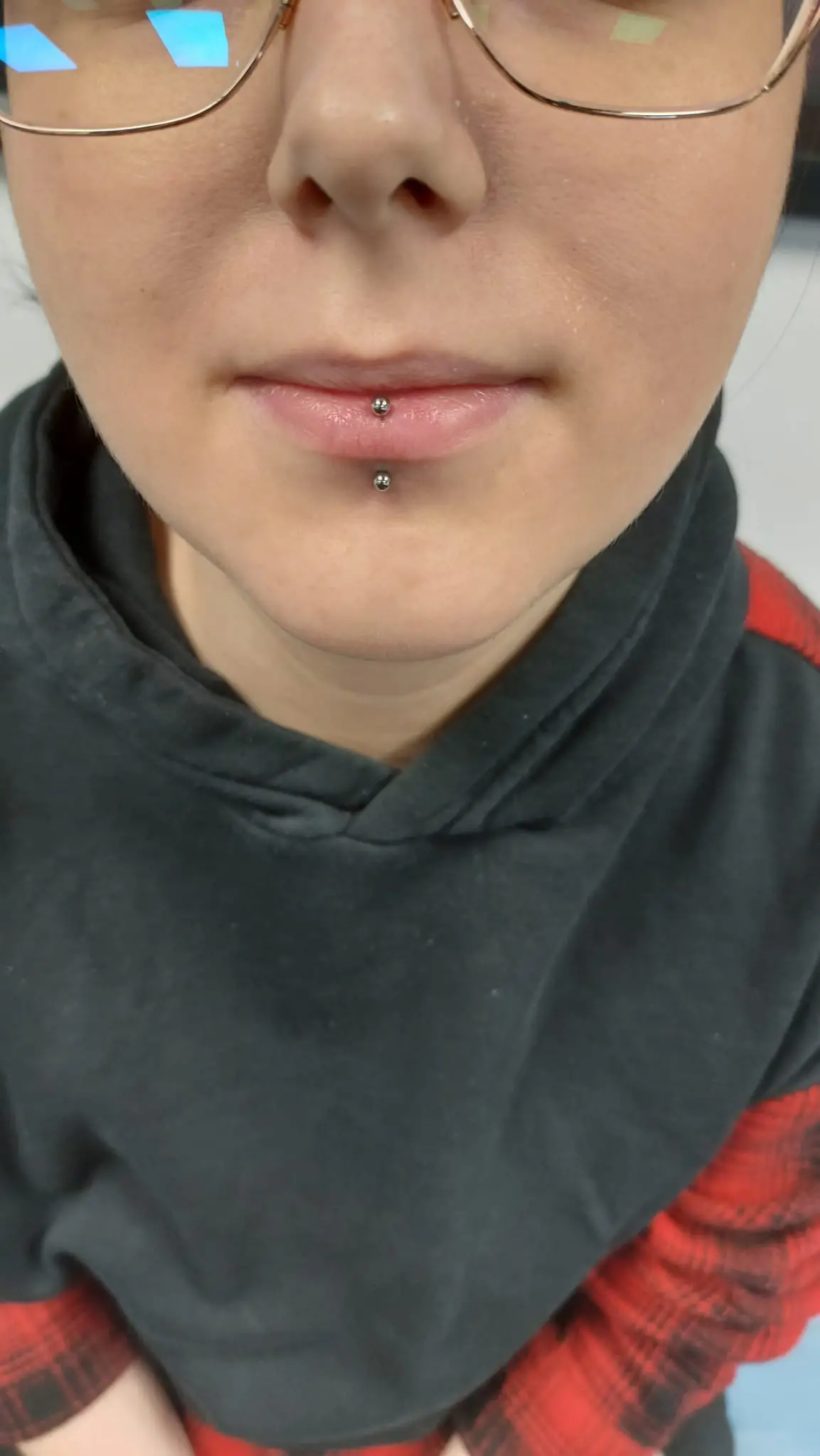
The basic four-step rule.
A simple routine is often more effective than using multiple products.
Wash your hands.
Do not touch the piercing before thoroughly washing your hands with water and soap.
Apply saline solution.
Use sterile 0.9% saline solution intended for wound cleaning.
Do not rub.
Soak deposits and remove only what comes off easily.
Dry gently.
Pat with a clean material, preferably disposable.
Wash your hands before anything else.
Cleaning your hands is the first barrier against microorganisms that can reach the sensitive area. Wash with water and soap, including between fingers and around nails. Avoid repeated touching outside the cleaning routine. Many irritations are maintained by constantly checking the jewellery, pressing, twisting, or touching with unwashed hands.
Choose sterile 0.9% saline solution.
Use a sterile, ready-made product based on 0.9% sodium chloride, intended for wound cleaning. Avoid preparing saline solutions at home, as proportions may be incorrect, and the container or water may introduce contaminants. A too high salt concentration can dry and irritate the tissue. Do not use contact lens solutions, as they may contain additional ingredients.
Soak deposits, do not rub the skin.
Apply the saline solution directly or with the help of a clean sterile compress. Let the area moisten enough for dried deposits to soften. Do not try to forcibly remove crusts and do not rub the entry or exit of the channel. The goal is gentle cleaning, not aggressive removal of every visible trace.
Do not rotate or pull the jewellery.
The jewellery should not be twisted for the solution to “enter the channel”. Forced movement can irritate the newly formed tissue and prolong healing. Do not push, lift, or change the jewellery before the recommended time. If it seems too tight, too long, or is embedding into the tissue, contact the studio for evaluation.
Dry by patting.
After cleaning, you can gently rinse the area with clean water if necessary, then dry by patting. Avoid commonly used textile towels, as they can retain moisture and microorganisms. Clean disposable materials are more suitable. Do not leave the area wet for long periods and do not use hot air.
Do not apply alcohol, hydrogen peroxide, or unsuitable creams.
Aggressive products can dry, irritate, or damage healing tissue. Avoid alcohol, spirits, hydrogen peroxide, iodine, greasy ointments, essential oils, and cosmetic creams applied directly to the channel. Do not use topical antibiotics without a doctor's recommendation. For more information, consult the piercing FAQ.
Follow the instructions for the chosen area.
A piercing in the ear, nose, lip, tongue, navel, or nipple may have different requirements. Oral piercings also involve oral cavity hygiene, and those through cartilage must be protected from pressure and from sleeping directly on them. Follow the instructions received at the studio and ask for clarifications when something is unclear. For costs and conditions, see the page piercing prices.
Observe the trend, not just the appearance on a single day.
Slight sensitivity, local swelling, or the formation of a pale crust may appear during the normal healing process. It is important that discomfort gradually decreases. Increasing pain, pronounced local heat, spreading redness, purulent discharge, fever, or general malaise require medical evaluation.
Excessive cleaning can irritate as much as neglect.
Do not clean compulsively and do not apply different products every time the area seems sensitive. Repeated handling can maintain inflammation.
Follow the routine indicated by the piercer and adapt it only after a real evaluation, not after contradictory advice found online.
What to do and what to avoid.
Consistency and minimal handling are more important than using many products.
What you should do.
- Wash your hands before cleaning.
- Use sterile 0.9% saline solution.
- Soak deposits before removal.
- Dry by patting, without rubbing.
- Protect the area from knocks and snagging.
- Respect the recommended period before changing the jewellery.
What you should avoid.
- Do not rotate, pull, or push the jewellery.
- Do not use alcohol, spirits, iodine, or hydrogen peroxide.
- Do not apply makeup, perfume, or creams directly on the channel.
- Do not sleep directly on a cartilage piercing.
- Avoid swimming pools, jacuzzis, and potentially contaminated water.
- Do not remove the jewellery on your own initiative if you suspect an infection.
When to seek medical help.
A possible complication should not be treated only with purchased products or online recommendations. Seek medical evaluation when symptoms intensify or general signs appear.
Piercing care clearly explained.
At 2nd Face Tattoo & Body Piercing, in the COCOR Store, near Unirii Square, you receive instructions tailored to the area and type of jewellery.
The studio is located at B-dul I.C. Brătianu 29–33, basement, Sector 3, Bucharest.
Keep researching.
Related useful pages for piercing care and monitoring.
Find out which sensations can be normal and when discomfort should be assessed.
Read the pain guideAnswers about appointments, age, prices, jewellery and healing.
See frequently asked questionsCheck the list of procedures and the conditions applicable to each type of piercing.
See the price listUnderstand the difference between labret, barbell, horseshoe, retainer and other shapes.
See the jewellery guideSend photos and describe observed changes for an initial evaluation.
See contact detailsCare for a piercing through the upper ear cartilage.
See Helix PiercingRecommendations for protecting the area from headphones and pressure.
See Tragus PiercingProper care of an internal nasal piercing.
See Septum PiercingCleaning and protection for a piercing in the nostril wing.
See Nostril PiercingHygiene specifics for oral piercings.
See Tongue PiercingProtecting the area from tight clothing and friction.
See Navel PiercingCare and protection of a dermal anchor.
See Dermal PiercingInformation about titanium, surgical steel and other materials.
See materialsSigns of migration, rejection, allergy or complications.
Read the guideProcedures are performed by appointment, by phone or via WhatsApp.
Write on WhatsAppFrequently asked questions.
What should be used to clean a piercing?
Use sterile 0.9% saline solution, ready-made and intended for wound cleaning. Avoid homemade solutions and products with additives.
How many times a day should it be cleaned?
Follow the frequency recommended at the salon. Excessive cleaning can dry and irritate the tissue, just as neglect can encourage residue buildup.
Should I rotate the jewellery?
No. Forced rotation and movement can irritate the healing channel and prolong recovery.
Can I use hydrogen peroxide or alcohol?
They are not recommended for routine care as they can irritate and dry the tissue. Use the method indicated by the piercer.
Is it normal for crust to appear?
A pale secretion that dries and forms crust may appear during healing. Do not forcibly remove it; gently soften the area before cleaning.
Can I remove the jewellery if the area seems infected?
Do not remove it on your own initiative. The channel can close and prevent drainage. Seek medical advice and inform the piercer.
When can I change the jewellery?
After the area is sufficiently stable and after evaluation by the piercer. The period varies depending on the piercing, anatomy and healing progress.
Clear information, adapted to each procedure.
2nd Face Tattoo & Body Piercing is a studio in Bucharest, opened in 2010, located in the COCOR Store, basement level, near Piața Unirii.
Care may differ depending on area, anatomy, jewellery and procedure progress.
Call 0724 669 330 or send a message via WhatsApp for information.
The material is for informational purposes and does not replace medical evaluation in case of severe or worsening symptoms.
Consult the page of piercing prices for services, minimum ages and booking methods.
Content updated in July 2026 and adapted to general responsible care recommendations.
Important: if pain, swelling or redness worsen, if fever or purulent discharge appears, seek medical evaluation. Do not remove the jewellery on your own if you suspect an infection.
Clean gently. Heal without haste.
For questions about the piercing's progress, contact the 2nd Face Tattoo & Body Piercing team.