A story written
directly on skin.
From Ötzi and Polynesian rituals to the electric machine, modern culture and today's professional salons.
What is the origin of tattoos?
Tattooing is one of the oldest known forms of body modification. Archaeological evidence shows that people marked their skin thousands of years before modern civilizations appeared, using tattoos for identity, protection, status, ritual, symbolic healing, or decoration.
From ritual marking to personal expression.
The history of tattoos traces the evolution of human societies: beliefs, hierarchies, travels, marginalisation, technology, and the transformation of tattooing into a form of body art.
Thousands of years.Different cultures. The same need to mark identity.
Tattooing appeared independently in several regions of the world and had deeply different meanings: protection, belonging, punishment, courage, memory, or beauty.
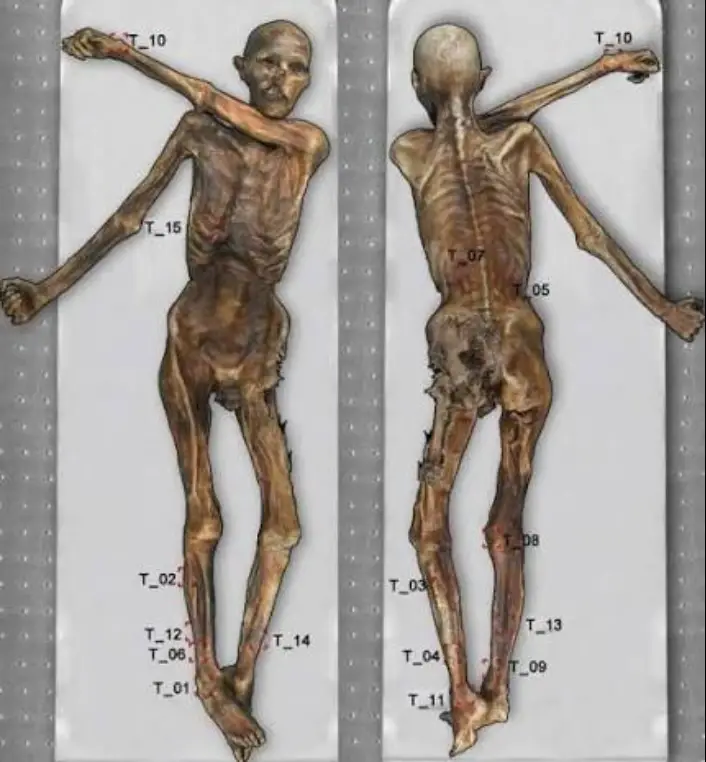
Tattoo timeline.
Key moments that changed the meaning and practice of tattooing.
Ötzi and early tattoos.
Some of the best-known prehistoric evidence comes from the mummified body of Ötzi, discovered in the Alps and dated to around 3300 BC. Over 60 marks were identified on his body, probably made by incising the skin and introducing a carbon-based pigment.
Their distribution near joints and stressed body areas has supported the hypothesis of a therapeutic or ritual role, although the exact intention cannot be determined with certainty.
Protection, status, and stigma.
In ancient Egypt, tattoos identified on some female mummies have been interpreted as decorative, religious, or protective symbols. In the Greco-Roman world, skin marking often had a negative social meaning, being used for slaves, prisoners, or punished persons.
These different uses show that tattooing never had a single universal meaning. The same gesture could represent protection in one culture and stigma in another.
The origin of the term “tattoo”.
The modern term is associated with the Polynesian tatau, used for the practice of skin marking. In Samoa, New Zealand, Hawaii, and other Pacific islands, tattoos could communicate genealogy, status, maturity, responsibility, and belonging.
In Maori traditions, moko It was not just decoration. The designs could express identity, rank, and personal history, and their form was linked to the social and spiritual structure of the community.
Between punishment and elaborate art.
In Japan, tattooing was used in certain periods as a form of punishment and identification. Later, the tradition irezumi developed into a complex visual language, with dragons, waves, flowers, heroes, and compositions covering large areas of the body.
In traditional China, tattooing was often viewed critically, including under the influence of the Confucian idea that the body inherited from parents should be kept intact.
Tattooing did not disappear completely from Europe.
In medieval Europe, the practice became rarer and was often associated with pagan customs. However, pilgrims and some crusaders sometimes marked their skin with Christian symbols as proof of their journey or faith.
In North Africa and the Middle East, numerous communities continued to use traditional tattoos for protection, beauty, family identity, or belonging.
The rediscovery of tattooing in the West.
European maritime expeditions brought sailors into contact with populations in Oceania. Sailors began to adopt tattoos to mark routes, experiences, crew membership, or survival of difficult journeys.
The accounts of James Cook's expeditions in the Pacific contributed to popularising the term “tattow” in English and to European interest in this practice.
The electric tattoo machine.
Samuel O’Reilly patented an electric tattoo machine in New York inspired by a device designed by Thomas Edison. The innovation made tattooing faster, more uniform, and more accessible.
This moment decisively contributed to the emergence of modern studios and the standardisation of the working process.
From sailors to popular culture.
After the two world wars, tattooing remained strongly associated with soldiers, sailors, motorcyclists, prisoners, and other groups perceived as marginal or nonconformist.
In the 1960s–1970s, countercultural movements transformed it into a symbol of freedom and personal identity. From the 1980s–1990s, musicians, actors, and athletes contributed to its normalisation in popular culture.
The emergence of professional salons.
In Romania, tattooing became much more visible after 1990, with access to modern equipment, magazines, Western culture, and the appearance of the first specialised studios.
The professionalisation process brought clearer rules regarding hygiene, sterilisation, client consultation, and the development of an artistic portfolio. In Bucharest, professional salons contributed to moving tattooing from the marginal zone towards an accepted form of art.
Styles, technology, and identity.
Contemporary tattooing includes realism, black & grey, colour, fine line, microrealism, traditional, lettering, ornamental, abstract, neo-traditional, and numerous combinations.
Artists use modern equipment, digital photography, tablet design, and specialised pigments. International conventions, competitions, and online portfolios have transformed tattooing into an artistic field with its own professional standards.
For current examples, see the gallery of tattoos made in Bucharest.
Different meanings in different cultures.
Tattooing could simultaneously represent belonging, protection, punishment, courage, memory, or status.
Genealogy and status.
The designs could communicate personal identity, social role, maturity, and belonging to family or community.
Visual narrative.
The large-scale irezumi compositions developed a complex language inspired by mythology, nature, and literature.
Faith and marginalisation.
Tattooing oscillated between religious symbol, social marking, and sign of groups on the margins of society.
Protection and identity.
In some communities, tattoos were used as symbols of protection, beauty, and family belonging.
Traditional and popularisation.
Sailors, the military, and urban culture contributed to the emergence of the American traditional style and the spread of studios.
Professionalisation after 1990.
Specialised studios introduced modern equipment, artistic portfolios, and clearer hygiene standards.
The function of tattooing has changed. The need to tell a story has remained.
A tattoo can mark a stage, a loss, a belief, an identity, or simply an aesthetic preference.
Technology has changed radically, but the idea of transforming the skin into a medium for meaning has remained constant.
Contemporary tattooing in Bucharest.
The history continues through artists, studios, and clients who transform personal ideas into projects realised on skin.
See works in realism, black & grey, colour, fine line, and other contemporary styles.
See tattoo photosDiscover the 2nd Face salon, the team, and the services available in Piața Unirii.
See the studioFind out what factors influence the cost of a personalised tattoo.
See pricesDesign, placement, preparation, healing, and maintenance.
Read the complete guideAnswers about scheduling, pain, healing, hygiene, and touch-ups.
See frequently asked questionsInformation about modern laser fading and removal procedures.
See the laser pageSources consulted.
- Dorin Marian, “The Art of Tattooing” – Revista Magazin, 8 November 2006, archived version.
- Maria Olaru, “The Ancient and Mysterious History of Tattoos: 10 Cultures That Used Such Body Modification Techniques” – Descoperă, 23 October 2013.
- Sinziana Boaru, “The Fascinating History of Tattoos, in Images from 1900 to Present” – Adevărul, 18 March 2014.
- Adrian Majuru, “Tattooing as a Social Seal” – Jurnalul Național, 13 June 2005.
- Anda-Diana Marin, “The Evolution of Traditional Maori Tattoos” – Adevărul, 24 September 2012.
- Marc Ulieriu, “Ancient Signs” – Descoperă, 12 July 2006.
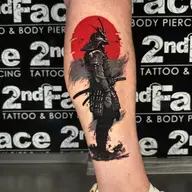
Material about the history of tattoos, published by the team of a salon in Bucharest opened in 2010. The content combines journalistic sources and professional context from the contemporary tattoo field.
Frequently asked questions.
What is the oldest known tattoo?
Among the oldest and best-known evidence are the tattoos on the mummified body of Ötzi, dated approximately around 3300 BC.
Where does the word “tattoo” come from?
The modern term is associated with the Polynesian tatauThe word “tattoo” comes from the Polynesian word “tatau”, adopted and popularised in Europe through the accounts of Pacific navigators.
What did tattoos mean in Polynesia?
Depending on the community, they could express genealogy, maturity, status, belonging, and personal identity.
When did the electric tattoo machine appear?
Samuel O’Reilly patented an electric tattoo machine in 1891, based on a device previously designed by Thomas Edison.
When did tattoos become popular in Romania?
The phenomenon became much more visible after 1990, with the appearance of specialised studios, access to modern equipment, and the influence of Western culture.
Is tattooing considered art?
Currently, tattooing is widely recognised as a form of body art. There are specialised artists, conventions, competitions, and styles with their own aesthetic rules.
Where can I see contemporary tattoos made in Bucharest?
You can consult the gallery of tattoos made by 2nd Face Tattoo and the dedicated page the tattoo salon in Bucharest.
Editorial note: Interpretations regarding the meaning of some archaeological tattoos may vary. When there are no contemporary texts directly explaining their purpose, researchers formulate hypotheses based on position, context, and cultural comparisons. Content updated in July 2026.
The history continues on the skin of every generation.
Discover contemporary tattooing and transform your own idea into a personalised project.