Short pulses.
Progressive fading.
How the Nd:YAG 1064/532 nm technology works for selective fragmentation of tattoo pigment.
What is the Q-Switched Nd:YAG laser?
It is a laser system that emits very short pulses, in the order of nanoseconds. The light energy is absorbed by certain pigment particles, which fragment into smaller particles. The body processes them gradually, which is why fading occurs over time and usually requires multiple sessions.
The technology behind fading.
The laser does not "erase" the ink instantly. It transmits energy to the pigment, and fading continues after the session through the body's natural processes.
Nd:YAGNanosecond pulses and two wavelengths
Parameters must be adapted to the tattoo, pigment colour, body area, and skin characteristics. The same setting is not suitable for all cases.
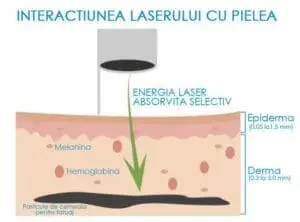
What happens in the skin.
The principle is selective photothermolysis: the pigment absorbs energy more intensely than the surrounding tissue when the wavelength is appropriately chosen.
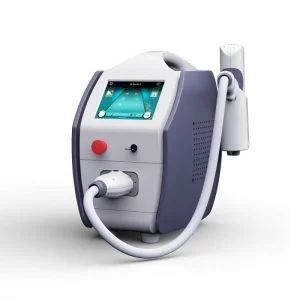
Q-Switched laser for tattoo pigment.
Q-switching allows energy accumulation and release in short, intense pulses. The short pulse duration is important for fragmenting ink particles.
The treatment must be adapted to each tattoo. Colour, pigment amount, overlays, pre-existing scars, phototype, and location can alter the response.
How a session works.
The technical process can be simply explained in four steps.
Evaluation.
The photo, colour, size, density, and area of the tattoo are analysed.
Parameters.
The wavelength and settings appropriate to the evaluated case are chosen.
Pulses.
Energy is applied in a controlled manner to the tattooed surface.
Recovery.
The skin regenerates, and fading may continue in the following weeks.
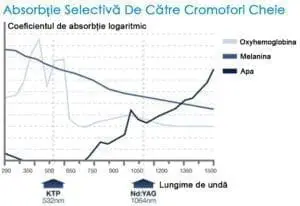
Absorption is selective but not identical for all colours.
Black and very dark pigments generally absorb 1064 nm energy well. Certain red and warm shades may respond to 532 nm.
Green, light blue, yellow, white, skin tones and some cosmetic inks can be more difficult to treat. Some light or cosmetic pigments may darken after laser exposure.
Two wavelengths.
Each wavelength is absorbed differently by pigment and skin.
Mainly used for black, grey and certain very dark shades. The response also depends on ink depth and density.
Can be used for certain red, orange and warm shades. The risk of altering the skin's natural pigment must be assessed.
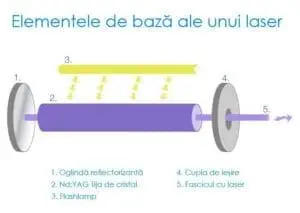
Light amplification by stimulated emission.
LASER is the English acronym for light amplification by stimulated emission of radiation. The Nd:YAG crystal acts as the active medium, and optical components form the beam.
Q-switching controls the release of energy in very short pulses, different from continuous emission or long pulses of other devices.
The number of sessions cannot be determined by size alone.
A small, dense tattoo may require more sessions than a larger but superficial one. Professional pigment, overlays, colours and scarring affect case difficulty.
A photograph can only provide an approximate estimate. Complete results cannot be guaranteed, and some tattoos remain partially visible.
What influences the result.
A realistic assessment starts from multiple factors, not a standard promise.
Colour and composition.
Black usually responds more predictably than yellow, green, white or cosmetic pigment.
Professional or amateur.
The amount, depth and distribution of ink can vary.
Cover-up and overlays.
Multiple pigment layers generally increase complexity.
Phototype and reaction.
The skin's natural pigment influences parameter selection and the risk of dyschromia.
Tattoo location.
Circulation, skin thickness and healing differ between body areas.
Scars and reactions.
Altered tissue, allergies or previous reactions require extra caution.
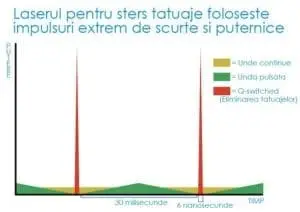
Why nanosecond pulses matter.
High energy is delivered in a short interval. This produces a photoacoustic effect on ink particles and helps fragment them.
Too aggressive settings do not automatically mean better results and can increase the risk of injury, skin colour changes or scarring.
Risks and limits.
Laser removal is progressive and may cause adverse effects. Realistic information is part of a responsible procedure.
Complete does not mean guaranteed.
Some tattoos fade very well, others remain partially visible. Colours and inks do not have a uniform composition.
Time between sessions is needed for skin recovery and pigment processing. The interval is set according to progress.
Related pages.
Useful information about assessment, procedure, tattoos and available options.
Information about procedure, assessment and scheduling.
See tattoo removalSend a clear photo, area and approximate size.
Request estimateCompare the fading option with creating a new design.
See tattoo pricesSometimes fading is done to prepare a tattoo for covering.
See tattoo galleryAnswers about skin, healing and special conditions.
Read tattoo FAQCOCOR store, in the basement, near Unirii Square, Bucharest.
See contact detailsExperience and verifiable information.
2nd Face Tattoo & Body Piercing is a salon in Bucharest, opened in 2010 and located in the COCOR Store, near Piața Unirii.
An estimate is based on photo, size, area, colour, density and tattoo history.
Number of sessions and degree of fading cannot be guaranteed before assessment and skin response.
Eye protection, appropriate parameters and following post-procedure instructions are essential.
Skin conditions, allergies, scars and unusual symptoms must be discussed with a doctor.
Content updated in July 2026 based on FDA sources and indexed PubMed literature.
Frequently asked questions.
What does Nd:YAG mean?
Nd:YAG is a synthetic crystal doped with neodymium, used as the active medium to generate the laser beam.
What does Q-Switched mean?
It is a technique where energy is accumulated and released in very short, intense pulses, on the order of nanoseconds.
Which colours respond better?
Black and certain very dark shades generally respond more predictably at 1064 nm. Certain red and warm shades may respond at 532 nm. Other colours can be more difficult.
Does the tattoo disappear after one session?
Usually not. Fading is progressive and requires multiple sessions, with intervals for skin recovery. Complete removal cannot be guaranteed.
How long should be left between sessions?
The interval is set according to skin reaction, body area and tattoo progress. Rushing the procedure before skin recovery is not recommended.
Can the laser leave scars?
There is a risk of scarring, colour changes, infection and other reactions. Risk depends on skin, tattoo, parameters and care.
Is permanent makeup treated the same?
Not always. Cosmetic, white or skin-coloured pigments may darken after laser and require careful assessment.
Can I do a cover-up after fading?
Yes, fading can reduce pigment density and give the artist more freedom for a cover-up. The right time is set after skin recovery.
How do I get an estimate?
Send a clear photo, taken in natural light, along with the approximate size and body area via the page laser session estimate.
Safety note: the information on this page is educational and does not replace medical assessment. Tattoo removal may be incomplete and can cause pain, infection, scarring, pinpoint bleeding or pigment changes. Seek medical evaluation for dermatological conditions, allergies, abnormal scarring tendency or worsening reactions.
Send a photo of the tattoo.
Receive an approximate estimate of cost and possible number of sessions, depending on tattoo characteristics.