Cleaning the piercing.
Correct, simple, without irritation.
Practical aftercare guide for piercing, clearly explained by the 2nd Face team from the COCOR Store, Sector 3.
How to clean a piercing correctly?
Wash your hands, spray sterile 0.9% saline solution on the area, let the crusts soften, then gently dab with a clean compress. Clean usually 1–2 times a day, without rotating, pulling, or removing the jewellery. Avoid alcohol, hydrogen peroxide, ointments, and homemade solutions. If symptoms worsen or intense pain, local heat, foul-smelling discharge, or fever appear, seek medical evaluation.
Proper cleaning supports healing.
A new piercing is a healing area. Consistent hygiene and avoiding trauma are more helpful than aggressive cleaning or using multiple products.
Clean hands.Jewellery stays in place and the area is not rubbed.
Touch the piercing only when cleaning it. Do not repeatedly check it with your fingers or remove dry crusts. Pressure, snagging, and movement of the jewellery can maintain inflammation.
Four basic rules.
Apply the same simple routine every day and follow the instructions received at the procedure.
Step-by-step piercing cleaning
1. Wash your hands and prepare a clean compress. Do not use a bath towel as it can retain moisture and snag on the jewellery.
2. Apply sterile 0.9% saline solution and let it act for a few moments. Dry deposits should be softened, not pulled off.
3. Remove only residues that come off easily, then dab until the area remains dry. Do not push the compress into the channel.
4. Repeat the routine 1–2 times a day or as instructed by your piercer. Excessive cleaning can dry and irritate the skin.
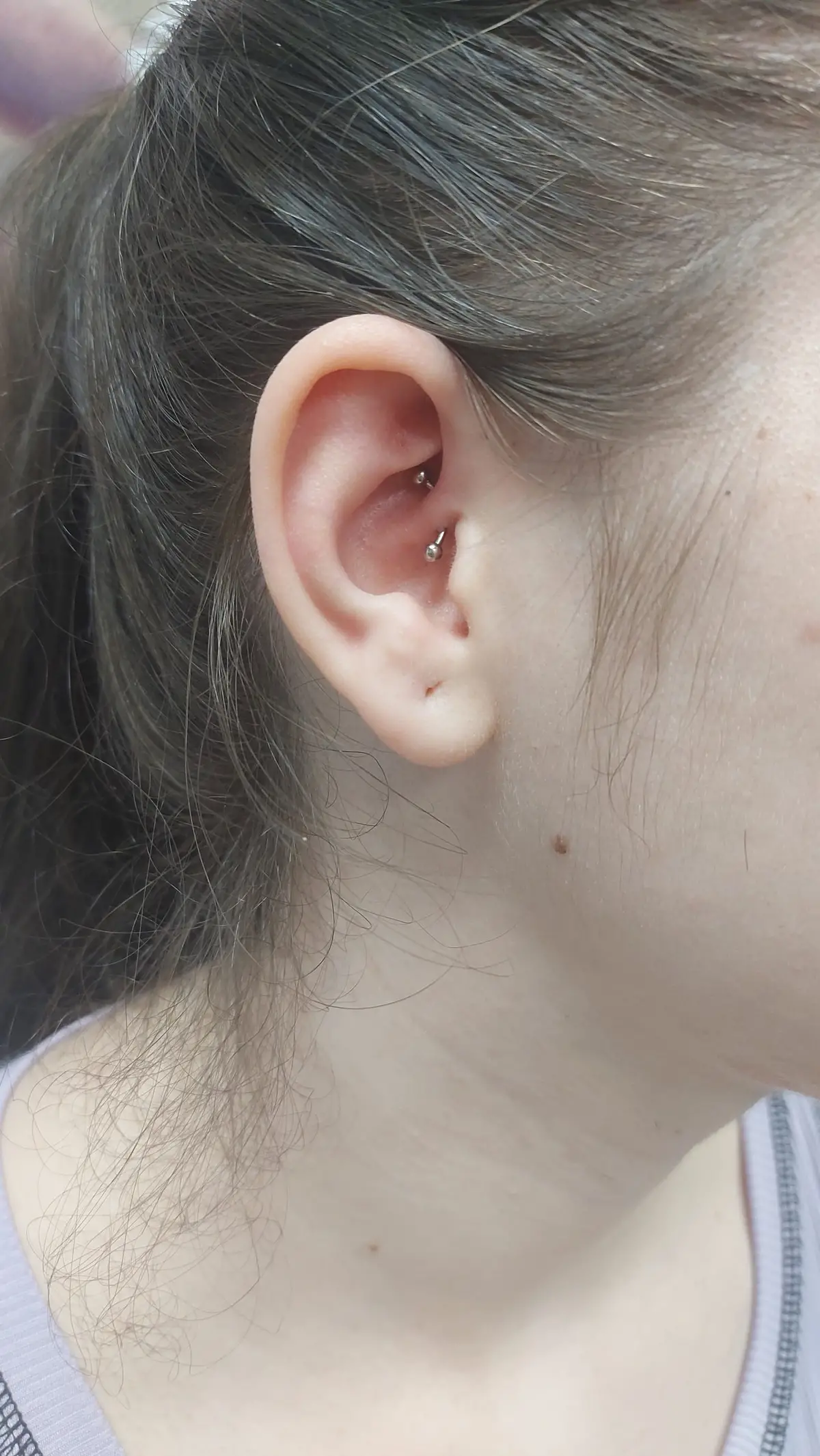
No pressure during sleep.
For an ear piercing, including helix, tragus, conch, rook, daith or industrial, try not to sleep on that side. Repeated pressure can cause irritation, swelling, and change the jewellery's angle.
Clean your phone, glasses, and headphones that may touch the area. Change pillowcases regularly and avoid tight headphones until the piercing is no longer sensitive.
Cartilage healing can take longer than lobe healing. A good external appearance does not always mean the tissue is fully healed.
Care adapted to the area.
The basic principle remains the same, but contact, friction, and moisture differ depending on the piercing location.
Nose piercing
For nostril or septum, clean gently without twisting the jewellery. Avoid makeup and creams directly on the area.
Ear piercing
For lobe and cartilage, avoid sleeping on the piercing, dirty phones, tight headphones, and snagging on hair or clothes.
Oral piercing
For tongue or lip, follow the specific protocol received at the salon and maintain oral hygiene without aggressive products.
Sensitive areas
For navel, nipple, or intimate piercing, avoid tight clothing and follow the piercer's instructions exactly.
What can be normal at the beginning.
Moderate sensitivity, slight swelling, a small amount of clear-whitish fluid, and the formation of fine crusts may appear in the early healing stages.
Symptoms should gradually reduce. Do not self-diagnose infection based only on appearance and do not remove the jewellery before evaluation.
When to seek help.
Seek medical evaluation if pain, redness, or swelling increase, the area becomes very warm, thick or foul-smelling discharge appears, red streaks on the skin, fever, or altered general condition.
For jewellery that is too tight, snagged, embedded in the skin, or seems incorrectly positioned, contact a professional piercer quickly. For significant medical symptoms, see a doctor.
Useful information about piercing.
Explore services, prices, booking rules, and relevant salon pages.
Frequently asked questions.
What is used to clean a new piercing?
Usually, sterile 0.9% saline solution without fragrance or other additives. Also follow the specific instructions received after the procedure.
How many times a day should the piercing be cleaned?
Generally, a gentle routine 1–2 times a day is sufficient. Excessive cleaning can dry and irritate the skin.
Should the jewellery be rotated during cleaning?
No. Rotating the jewellery can traumatise the forming channel and prolong irritation.
Can I remove crusts from the piercing?
Only after they have softened and only if they come off easily. Do not break or scratch them while dry.
Can I use alcohol, hydrogen peroxide, or Betadine?
Do not use routinely without medical recommendation. Aggressive products can damage new tissue and delay healing.
Can I remove the jewellery if the piercing seems infected?
Do not remove it yourself. The channel can close externally and prevent drainage. Seek medical advice and inform your piercer.
Can I go to the pool or sauna after piercing?
It is wise to avoid pools, jacuzzis, lakes, and saunas in the initial period, as moisture and water can increase the risk of irritation or contamination.
How long does a piercing take to heal?
The duration varies greatly depending on area, anatomy, jewellery, and care. Do not change the jewellery just because the area looks good externally.
Piercing in Bucharest, near Unirii Square.
2nd Face Tattoo & Body Piercing is located at B-dul I.C. Brătianu 29–33, in the COCOR Store, basement, Sector 3, Bucharest. The location is accessible from the Piața Unirii area and the city centre.
For jewellery checks, aftercare recommendations, or a new appointment, consult the Bucharest piercing page and the 2nd Face contact.