Japanese Tattoo.
Irezumi and symbols.
Large compositions, mythological characters and meanings inspired by Japanese tradition.
What defines a Japanese tattoo?
A Japanese tattoo is constructed as a unified composition, where characters, flowers, waves, clouds and backgrounds are conceived together. The style emphasises flow, balance, symbolism and adapting the design to the shape of the body.
More than a decorative motif.
In the Japanese style, symbols, direction of movement and the relationship between elements contribute to the overall message of the tattoo.
Essential elements.
A style built for large surfaces.
Japanese tattoos are suitable for the arm, back, chest, thigh or sleeve-type compositions.
The design must be adapted to the anatomy so that the elements flow naturally and remain easy to read.
The history and evolution of the Japanese style.
Irezumi and horimono are terms used for traditional forms of Japanese tattoo. Over time, tattoos have had different roles: social marking, artistic expression, symbolic protection or belonging to certain groups.
Currently, the Japanese style is internationally appreciated for its complex compositions, visual rhythm and the way it integrates the body into the design.
Symbols and meanings.
The Japanese dragon
It is frequently associated with power, protection, wisdom and control of natural elements.
The koi carp
It is used as a symbol of perseverance, transformation and overcoming obstacles.
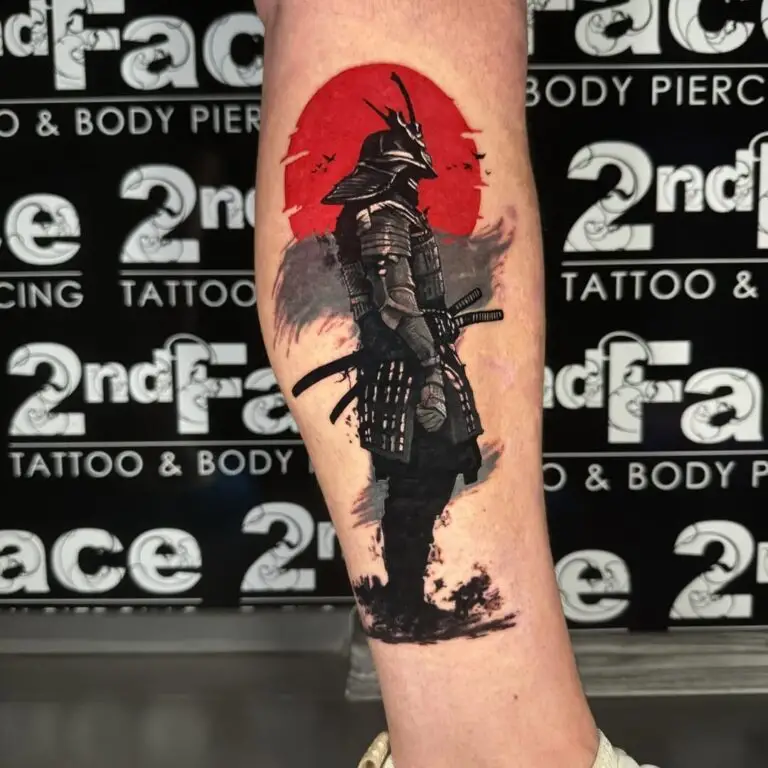
The Samurai
It can represent discipline, loyalty, courage and adherence to a personal code.
The Hannya Mask
It is a powerful image, associated with intense emotions, jealousy, suffering and transformation.
Flowers and backgrounds
Peonies, cherry blossoms, chrysanthemums, waves and clouds contribute to the balance of the composition and the suggested season or atmosphere.
Technique, colour and composition.
The Japanese style uses clear lines, strong contrasts, dynamic backgrounds and well-defined colour areas. A successful project is not just about choosing a symbol, but integrating it into a composition adapted to the body.
Works can be done in colour or black and grey, depending on preferences and artistic direction.
A project that requires planning.
Large projects are divided into several sessions. The outline, shading, background and colour can be done in stages, and the total time depends on surface, details and healing pace.
To compare visual directions, you can also consult the article about tattoo styles, and for an introduction to the process see the page What is, actually, a tattoo?.
Japanese tattoos in Bucharest.
2nd Face Tattoo & Body Piercing is located in the COCOR Store, basement, B-dul I.C. Brătianu 29–33, Sector 3, Bucharest, near Piața Unirii.
For an estimate, send the design, approximate size and body area.
Related pages.
Information about styles, prices, works and appointments.
Information about the studio, services and location.
See the pageAvailable styles and services.
See the pageHow to estimate the cost of a project.
See the pageRequest an evaluation for your idea.
See the pageGallery of completed works.
See the pageSelection of works done in the salon.
See the pageBlack and white style and shading.
See the pageCompositions with three-dimensional effect.
See the pageMinimalist design and fine lines.
See the pageIdeas for small-sized tattoos.
See the pagePopular designs and areas for men.
See the pageIdeas and styles for women.
See the pageDesigns for arm and sleeve.
See the pageCovering an old tattoo.
See the pageIntegrating the old tattoo into a new design.
See the pagePreparation before the session.
See the pageRecommendations before and after the session.
See the pageHygiene, reactions and possible complications.
See the pageFrequently asked questions about tattoos.
See the pageAddress, phone and WhatsApp.
See the pageFrequently asked questions.
What is a Japanese tattoo?
It is a tattoo style inspired by the irezumi tradition, characterised by large compositions, cultural symbols, dynamic backgrounds and a careful relationship between elements.
What symbols appear frequently?
Dragons, koi carp, tigers, cherry blossoms, peonies, Hannya masks, waves and clouds are among the frequently encountered motifs.
How long does a large Japanese tattoo take?
Large projects are usually done in multiple sessions, and the duration depends on surface area, level of detail, colour and working pace.
Can a Japanese tattoo be done only in black and grey?
Yes. The style can be done both in colour and black and grey, if the composition structure and symbolism are respected.
How to choose the right artist?
Examine the portfolio, large compositions, how the backgrounds are drawn and the artist's experience with Japanese symbols.
Build the project step by step.
Send the design and body area for an indicative evaluation.
