Tattoo risks.
Information before decision.
Possible complications, warning signs and measures that reduce risks before and after tattooing.
What risks can a tattoo have?
A tattoo can be followed by infection, allergic reaction, granuloma, hypertrophic or keloid scarring, irritation of a skin condition and difficulties in pigment removal. The risk cannot be completely eliminated but can be reduced through hygiene, sterile consumables, identified pigments and proper care.
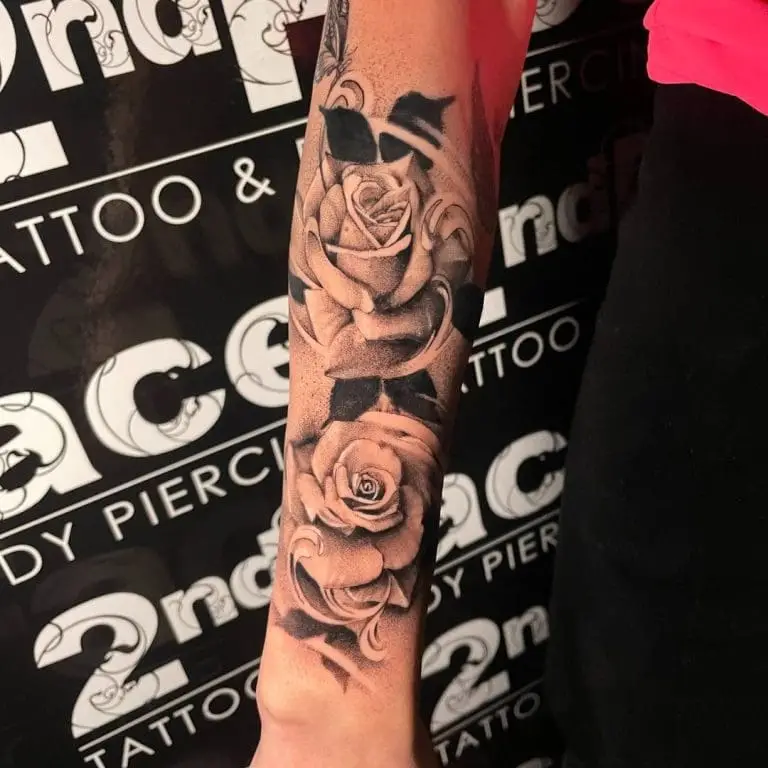
Sterility is not just about the needle.
Needles must be sterile and single-use. Pigment containers and consumables that come into contact with the procedure must be individual, and reusable surfaces and equipment must be managed according to hygiene procedures.
Infections can also arise from contaminated pigments, even when the technical procedure was correctly performed. Therefore, the origin and identification of the products used matter.
Infections.
Spreading redness, progressive pain, local heat, purulent discharge or fever require medical evaluation.
Allergic reactions.
They can appear immediately or some time after tattooing. Persistent itching, rash and swelling must be evaluated.
Granuloma.
A nodule can form around particles perceived by the body as foreign material.
Keloid.
People who form extensive scars beyond the initial wound have a higher risk.
Skin conditions.
Skin trauma can sometimes trigger or worsen psoriasis, eczema or other conditions.
Dissatisfaction.
The design, colour and body can change over time, and correction or removal can be difficult.
Laser tattoo removal.
Tattoo removal is a gradual process. The number of sessions and the outcome depend on colours, density, pigment depth, location, tattoo age and the body's reaction.
The statement that complete removal without scarring is "impossible" is too absolute. Some tattoos fade significantly, while others retain residual pigment or skin changes. Neither complete disappearance nor absence of scarring can be guaranteed.
Tattoos and MRI scans
Reactions during magnetic resonance imaging are rare but may include sensations of heat, burning, swelling or stinging in the tattooed area. A tattoo is not usually a reason to refuse a medically recommended MRI.
Inform the radiologist or technician about tattoos and permanent makeup before the examination. If you feel burning or stinging during the scan, notify the staff immediately.
What is normal after tattooing
Slight redness, sensitivity, local warmth, and the discharge of a small amount of clear fluid may occur initially. These symptoms should gradually decrease, not worsen.
For preparation and prevention, also see Complete guide before tattooing, as well as the page Tattoo Tips.
Seek medical evaluation for fever, increasing pain, spreading redness, purulent discharge, severe swelling, red streaks on the skin, altered general condition, hives, dizziness, or difficulty breathing. For breathing difficulties or severe reactions, seek emergency medical assistance.
Information and tattoos in Bucharest.
2nd Face Tattoo & Body Piercing is located in the COCOR Store, basement, B-dul I.C. Brătianu 29–33, Sector 3, Bucharest, near Piața Unirii.
Before tattooing, the design, area, size, declared contraindications, and care instructions are discussed.
Related pages.
Preparation and recommendations before the session.
See the pageHow pigment is introduced into the skin.
See the pageInformation about discomfort and areas.
See the pageRecommendations before and after the procedure.
See the pageEstimate based on design, size, and area.
See the pageInformation about the studio and appointments.
See the pageAvailable styles and services.
See the pageRequest an evaluation for your project.
See the pageBooking and deposit conditions.
See the pageCovering an existing tattoo.
See the pageTransforming an old tattoo.
See the pagePrinciples and limits of covering.
See the pageInformation about the removal procedure.
See the pageLaser technology used by the studio.
See the pageGuide on styles and choosing the design.
See the pageVolume, contrast, and shading.
See the pageFine lines and minimalist compositions.
See the pageThree-dimensional effects and perspective.
See the pageWorks done in the studio.
See the pageGallery of completed tattoos.
See the pageAnswers about procedure and care.
See the pageConditions for access and performing procedures.
See the pageAddress, phone and WhatsApp.
See the pageFrequently asked questions.
What are the main risks of a tattoo?
Risks may include infections, allergic reactions, abnormal scarring, granuloma, worsening of skin conditions, and difficulties in tattoo removal.
Is it normal for a tattoo to be red after the procedure?
Slight redness, sensitivity, and swelling may appear immediately after tattooing. If symptoms worsen, spread, or are accompanied by fever or purulent discharge, medical evaluation is necessary.
Can you have an MRI if you have tattoos?
Yes. The person must inform the technician or radiologist about tattoos and immediately report any burning or stinging sensations during the examination.
Can an allergy appear years later?
Yes. Some reactions to pigments can occur long after tattooing, including after several years.
Can a tattoo be completely removed?
Laser removal usually requires multiple sessions. The result depends on colour, depth, pigment density, and skin reaction, and complete removal cannot be guaranteed.
When should a doctor be consulted?
Medical evaluation is necessary for fever, progressive pain, spreading redness, purulent discharge, severe swelling, breathing difficulties, or a persistent reaction.
Inform yourself beforehand. Care properly afterwards.
Discuss openly about relevant medical history and seek medical evaluation when warning signs appear.
