Types of piercing.
Complete guide.
Ear, nose, face, mouth, navel, dermal, nipple, and intimate piercings.
What are the main types of piercing?
Piercing types are divided by body area: ear, nose, eyebrow, lip, tongue, navel, dermal, nipple, and intimate. The choice depends on anatomy, style, jewellery type, and the healing period you can manage.
Not every piercing suits every anatomy.
Positioning and jewellery must be adapted to the shape of the area, movement, and lifestyle.
What needs to be evaluated.
The initial jewellery is chosen for healing.
The shape and size must allow for swelling and reduce pressure on the tissue.
After healing, the jewellery can be changed to a more decorative one if the area is stable.
What does "types of piercing" actually mean?
The expression "types of piercing" can describe two different things: the anatomical area where the piercing is made and the configuration of the jewellery used. For example, helix, tragus, septum or nostril are names related to position, while barbell, labret, ring or horseshoe describe the shape of the jewellery. The correct choice is not made based on appearance alone. Anatomy, tissue thickness, mobility of the area, lifestyle and the ability to follow aftercare are equally important.
A well-planned piercing starts with an assessment by a professional. Some people do not have the right anatomy for a certain type, and in other cases the positioning must be adjusted so that the jewellery does not press, migrate or catch frequently. For this reason, an inspiration photo cannot replace a direct evaluation.
Ear piercings.
The ear offers the most options, from the soft lobe to complex cartilage areas. An ear composition can include a single discreet piercing or multiple piercings planned together, depending on the shape of the auricle and the desired jewellery.
Lobe Piercing
The lobe is the most well-known and generally the most accessible area. The tissue is soft, and jewellery can range from simple earrings to rings and multiple compositions. Even if it seems like a simple procedure, positioning must be carefully measured, especially when aiming for symmetry or adding multiple piercings on the same ear.
Helix Piercing
The helix crosses the upper edge of the cartilage. It can be positioned higher or lower and can be done singly, doubly or triply. In the initial period, stable and well-sized jewellery reduces the risk of pressure and catching. Cartilage requires patience, and sleeping directly on the ear can prolong irritation.
Forward Helix and Flat
The forward helix is positioned on the front part of the upper cartilage, near where the ear joins the head. The flat piercing is made on the flatter surface of the upper auricle. Both can have an elegant effect but require sufficiently well-defined anatomy and jewellery that does not exert excessive pressure.
Tragus and Anti-Tragus
The tragus is the small prominence in front of the ear canal. The anti-tragus is located on the opposite side, above the lobe. The thickness and shape of the cartilage vary greatly between people, so not every ear is suitable for both options. Headphones, phone use and sleeping position must be considered before choosing.
Daith, Rook and Snug
The daith is placed in the inner fold of the ear, the rook in the cartilage ridge above it, and the snug crosses a more rigid internal area. These are piercings with a strong visual impact, but positioning is technical and depends greatly on anatomy. Because they are in cartilage, healing can be slower and requires avoiding repeated pressure.
Conch and Industrial
The conch is positioned in the central area of the auricle and can be worn with a stud or, after healing, with a suitable ring. The industrial connects two piercings with a single long barbell. The angles must be precisely aligned; otherwise, the bar can press the tissue and cause irritation. Not every ear has the anatomy necessary for a classic industrial.
Nose piercings.
Nose piercings are very visible and allow for discreet or statement jewellery. The most well-known are nostril, septum and bridge, each having different anatomical and aftercare requirements.
Nostril and ring piercing
The nostril crosses one of the nostrils and can be worn with a stud or, after healing, with a ring. The position must be chosen according to the shape of the nose and the type of jewellery desired. Direct mounting of a ring may be suitable only in certain situations, as greater movement can irritate the fresh channel.
Septum
The septum is made in the soft area under the nasal cartilage, when anatomy allows. The jewellery can be a ring, a horseshoe or a retainer. The aesthetic advantage is versatility: some jewellery can be temporarily hidden. Correct positioning is essential for comfort and symmetry.
Bridge
The bridge is a surface piercing placed at the root of the nose, between the eyes. It does not cross the bone but the superficial tissue. Because it is subject to tension and movement, there is a higher risk of migration or rejection, and people who wear glasses should check if the frame touches the area.
Eyebrow and facial piercings.
The eyebrow piercing is a surface piercing, usually positioned vertically towards the outer edge. It can be worn with a curved barbell or jewellery adapted to the anatomy. Because the skin is mobile and relatively thin, signs of migration must be monitored.
Facial piercings also include rarer variants, such as cheek or dermal in the cheekbone area. These require careful evaluation as they can affect internal tissues, leave visible scars and require more complex care.
Lip and oral cavity piercings.
The oral area includes numerous configurations: labret, vertical labret, Monroe, Medusa, snake bites, smiley, marley and tongue piercing. Jewellery must be chosen to reduce pressure on teeth and gums. Oral hygiene and swelling control are decisive in the first days.
Labret and Vertical Labret
The labret is positioned under the lower lip and has part of the jewellery inside the mouth. The vertical labret crosses the lip vertically and remains completely outside the oral cavity. The difference is important as it changes the risk of contact with gums and teeth.
Medusa, Monroe and lip combinations
The Medusa is positioned centrally, above the upper lip, in the philtrum. Monroe or Madonna are positioned laterally and imitate a beauty mark. Snake bites, angel bites and other combinations use two symmetrical piercings. Symmetry and initial jewellery length must be planned before the procedure.
Smiley and Marley
The smiley crosses the frenulum of the upper lip, and the marley is associated with the lower frenulum. Not everyone has a sufficiently developed frenulum. These piercings can come into contact with teeth and gums, which is why evaluation and monitoring are important.
Tongue piercing
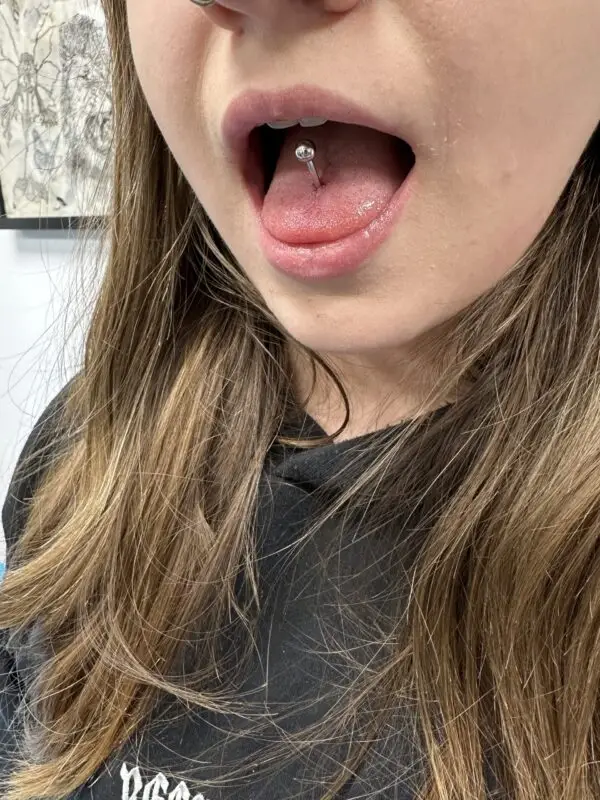
The tongue piercing is usually made vertically and is worn with a barbell. Before the procedure, tongue length, mobility and vessel position must be checked. Initial swelling is normal, and the jewellery must be sized for this stage. After healing, shortening the bar may be necessary to reduce contact with teeth.
Navel piercing.
The navel piercing is a surface piercing most often made in the upper fold. The anatomy of the navel must allow jewellery stability both standing and sitting. Tight clothing, waistband and sports activities can cause friction. Healing takes time, and changing the jewellery should not be rushed.
Dermal Piercing.
The dermal, also called microdermal, uses an anchor positioned under the skin, to which a decorative end is attached. It can be mounted in areas where a classic piercing with entry and exit is not possible. Being a superficial implant, it can migrate or be rejected, especially if frequently caught.
Nipple piercing.
Nipple piercing can be done on both women and men, after anatomy evaluation. The initial jewellery is chosen to allow swelling and avoid pressure. Friction from clothing, sports and direct contact must be carefully managed. The procedure is available only to adults.
Intimate piercings for women.
Intimate piercings include variants such as Christina and VCH, each having different anatomy, positioning and aesthetic purpose. Not everyone is suitable for every variant. Evaluation is done individually, and the procedure is exclusively available to adults. Discretion, hygiene and following post-procedure instructions are essential.
How to choose the right type of piercing?
Start with the style you want, but don't stop at appearance. Consider if the area is touched by headphones, glasses, mask, phone, clothing or sports equipment. Think about whether you can avoid sleeping on the piercing and if your schedule allows for a period of careful aftercare.
The initial jewellery must be chosen for healing, not just for photos. A very small ring, a bar that is too short or an unsuitable shape can create pressure. After healing, the jewellery can be changed to a more decorative one if the piercer confirms the tissue is stable.
General aftercare after piercing.
Wash your hands before touching the area and avoid unnecessary rotation of the jewellery. Cleaning must be done according to the instructions received at the studio. Do not apply alcohol, hydrogen peroxide, perfumes or harsh products unless recommended. Avoid pools, saunas and contact with dirty surfaces during the initial period.
Some sensitivity, slight swelling and clear discharge may occur during healing. Increasing pain, extensive redness, purulent discharge, fever or persistent bleeding require evaluation. Jewellery should not be removed without recommendation when infection is suspected, as the channel can close at the surface.
Jewellery material and sensitivities.
The material influences comfort and tissue reaction. People with known sensitivities must inform the piercer before the procedure. Jewellery surfaces must be smooth, and the thread and size adapted to the area. Unsuitable jewellery can cause pressure, catching, irritation or migration.
It is also important that the jewellery is checked periodically during the healing period. A bar that has become too long after swelling reduction can catch, and one that is too short can compress the tissue. Adjustment is not done at home but after evaluation of the area by the piercer.
Booking and studio rules.
At 2nd Face Tattoo & Body Piercing, booking for piercing is required and must be made no more than two days in advance. For regular procedures, persons aged 16 and over can attend according to studio rules, and certain piercings are available exclusively to adults. Identification is required.
For further information, you can discreetly consult the guide about choosing jewellery for piercing and the article How a piercing is done.
Piercing in Bucharest, near Unirii Square.
2nd Face Tattoo & Body Piercing is located in the COCOR Store, basement, B-dul I.C. Brătianu 29–33, Sector 3, Bucharest.
An appointment is necessary and must be made up to two days in advance.
Related pages.
Information about procedures, areas, jewellery, healing and booking.
Complete list of procedures and prices.
See the pageStages of a professional procedure.
See the pageInformation about infections, reactions and complications.
See the pageHow discomfort differs depending on the area.
See the pageTypes, shapes and materials for jewellery.
See the pageBarbell, ring, labret and other configurations.
See the pageOptions for nose, eyebrow and lips.
See the pageGeneral guide about nasal piercings.
See the pageInformation about septum piercing.
See the pageParticularities, jewellery and care.
See the pagePrice, procedure and healing.
See the pagePiercing in the ear cartilage.
See the pagePiercing on the upper edge of the ear.
See the pagePiercing in the upper cartilage of the ear.
See the pageDermal anchor and specifics.
See the pageProcedure available only to adults.
See the pageInformation about intimate piercings.
See the pageQuestions about appointments and care.
See the pageRules applicable to minors.
See the pageAddress, phone and WhatsApp.
See the pageFrequently asked questions.
What are the most popular types of piercing?
Lobe, helix, tragus, nostril, septum, eyebrow, lip, tongue and navel are among the most requested.
How do I choose the right type?
The choice depends on anatomy, style, activities, jewellery, and the ability to follow the healing process.
Which heals faster?
In general, soft tissue can heal faster than cartilage, but the time varies from person to person.
What jewellery is used initially?
The shape and size are chosen by the piercer depending on the area, anatomy, and estimated swelling.
When should medical help be sought?
For fever, increasing pain, extensive redness, pus, persistent bleeding, or difficulty swallowing or breathing.
Choose the piercing based on anatomy, not just on a photograph.
Schedule an evaluation for positioning and the right jewellery.